

Blog
How is urea fertilizer produced

How Is Urea Fertilizer Produced? A Complete Guide for Farmers, Buyers, and Agricultural Businesses
Urea fertilizer is one of the most widely used nitrogen fertilizers in modern agriculture. Farmers, distributors, and agricultural businesses rely on it because it delivers a high concentration of nitrogen, is easy to transport, and can be used on many crops when applied correctly.
But many people who buy urea fertilizer still ask one important question: How is urea fertilizer produced?
Understanding how urea is made helps buyers know what they are purchasing, why quality matters, and what to look for when choosing a reliable supplier. At Urea Fertilizer Source, we sell urea fertilizer and help customers find the right fertilizer supply for agricultural use, bulk purchasing, and crop production needs.
This guide explains what urea fertilizer is, how it is produced step by step, why it is so valuable to farmers, and how to choose the right urea fertilizer supplier.
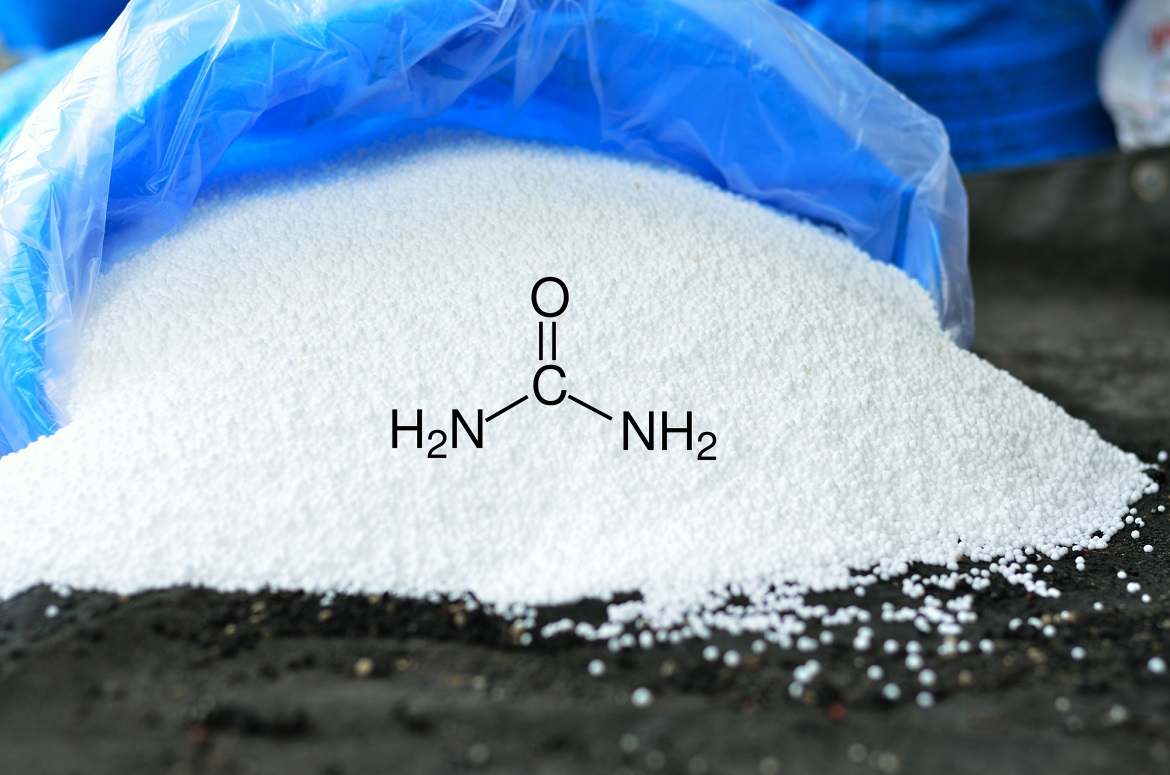
Urea fertilizer is a nitrogen-rich fertilizer commonly sold as urea 46-0-0. This means it contains about 46% nitrogen, with no phosphorus and no potassium. Because nitrogen is one of the most important nutrients for plant growth, urea is used to support strong leaf development, healthy plant color, and improved crop productivity.
What Is Urea Fertilizer?
Nitrogen helps plants produce chlorophyll, the green pigment needed for photosynthesis. It also supports protein formation, root development, and overall crop growth. Crops such as corn, wheat, rice, sugarcane, vegetables, pasture, and many other field crops often require nitrogen fertilizer to reach strong yields.
Urea is popular because it is:
High in nitrogen
Economical per unit of nitrogen
Easy to store and transport
Suitable for many crops
Available in prilled or granular form
Useful for bulk agricultural fertilizer programs
Because of its high nitrogen content, urea gives farmers more nutrient value in less product compared with many other solid nitrogen fertilizers.
How Is Urea Fertilizer Produced?
Urea fertilizer is produced through an industrial chemical process that combines ammonia and carbon dioxide under controlled temperature and pressure. These two raw materials react to form urea, which is then concentrated, shaped into solid particles, cooled, screened, and packaged.
The basic production process includes the following stages:
Ammonia production or supply
Carbon dioxide collection
Urea synthesis
Dehydration and concentration
Prilling or granulation
Cooling and screening
Quality testing
Packaging and distribution
Let’s look at each step in more detail.
Step 1: Ammonia Is Produced or Supplied
The first major ingredient in urea fertilizer production is ammonia. Ammonia is a nitrogen-containing compound made from nitrogen and hydrogen. In most fertilizer plants, ammonia is produced using natural gas as a hydrogen source.
Ammonia is important because it provides the nitrogen that eventually becomes part of urea fertilizer. Without ammonia, there is no urea production.
Large fertilizer manufacturing facilities often produce ammonia on-site or receive it from nearby ammonia plants. Once available, ammonia is sent into the urea production unit where it reacts with carbon dioxide.
Step 2: Carbon Dioxide Is Collected
The second major ingredient is carbon dioxide. In many fertilizer plants, carbon dioxide is produced as a byproduct during ammonia manufacturing. Instead of being wasted, it is captured and reused in the urea production process.
This is one reason urea production is closely connected to ammonia production. The two processes often work together, with ammonia providing nitrogen and carbon dioxide providing the carbon and oxygen needed to form urea.
Step 3: Ammonia and Carbon Dioxide React to Form Ammonium Carbamate
Inside the urea synthesis reactor, ammonia and carbon dioxide are combined under high pressure and controlled heat. The first reaction forms ammonium carbamate.
This is an intermediate compound, meaning it is not the final product yet. It is an important step because ammonium carbamate is then converted into urea.
In simple terms:
Ammonia + Carbon Dioxide → Ammonium Carbamate → Urea
This reaction must be carefully controlled. Temperature, pressure, material balance, and recycling of unreacted gases all affect the efficiency and quality of the finished urea product.
Step 4: Ammonium Carbamate Is Converted Into Urea
After ammonium carbamate forms, it goes through a dehydration reaction. During this step, water is removed and urea is formed.
At this stage, the product is not yet the dry white granule or prill that farmers buy. It is usually a urea solution or melt that still contains water and may contain unreacted ammonia and carbon dioxide.
Modern urea plants recover and recycle unreacted ammonia and carbon dioxide back into the process. This improves efficiency, reduces waste, and helps produce a more consistent final product.
Step 5: The Urea Solution Is Concentrated
Once urea is formed, the solution must be concentrated. Excess water is removed through evaporation until the urea becomes a highly concentrated melt.
This step is important because the product must be dry enough to form strong particles. If the moisture level is too high, the fertilizer can cake, clump, or become difficult to handle during storage and transport.
A good urea product should be dry, free-flowing, and easy to spread.
Step 6: Urea Is Formed Into Prills or Granules
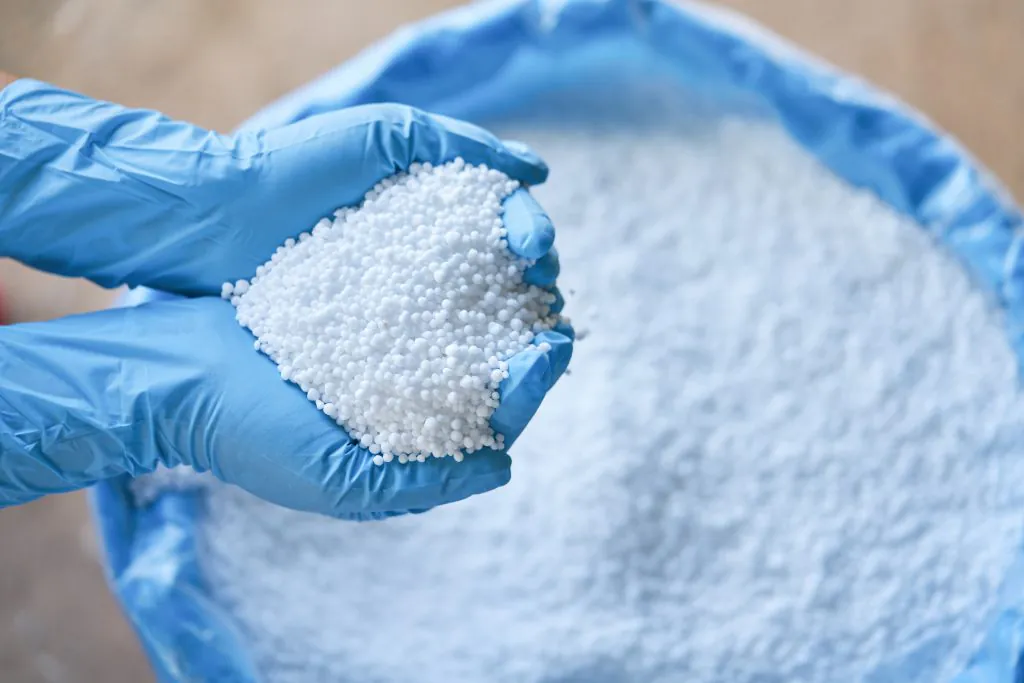
After concentration, the urea melt is turned into solid fertilizer particles. The two most common forms are prilled urea and granular urea.
Prilled Urea
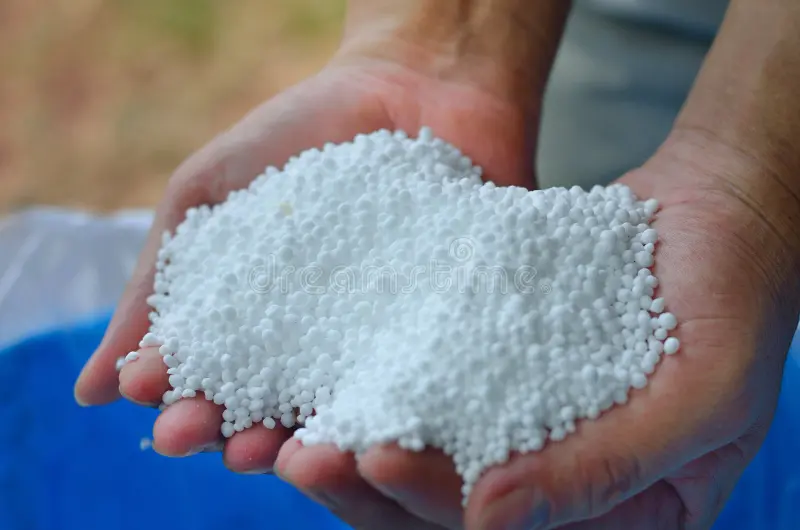
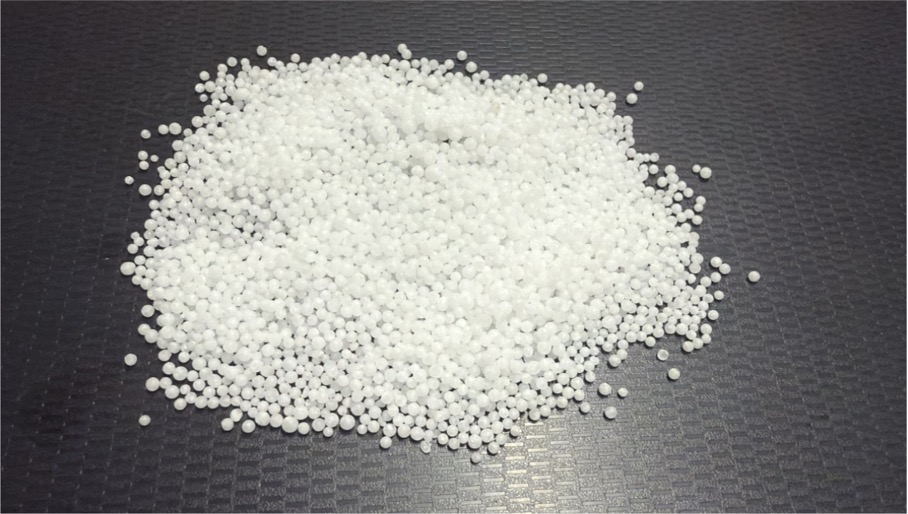
Prilled urea is made by spraying molten urea from the top of a tall prilling tower. As the droplets fall through the tower, they cool and solidify into small round particles.
Prilled urea is commonly used in agriculture and is generally smaller and lighter than granular urea.
Granular Urea
Granular urea is made in a granulation system, where urea particles are built up into larger, harder granules. Granular urea is often preferred for bulk blending, mechanical spreading, and larger-scale fertilizer application because the particles are usually stronger and more uniform.
Both prilled and granular urea can be effective. The best choice depends on application method, crop type, handling requirements, and buyer preference.
Step 7: Cooling, Screening, and Coating
After the urea particles are formed, they must be cooled. Cooling helps the particles become stable and reduces the risk of caking during storage.
Next, the particles are screened by size. Oversized particles may be crushed and recycled, while undersized particles may be returned to the granulation process. The goal is to produce a consistent product with uniform particle size.
In some cases, an anti-caking agent or coating may be added. This helps keep the fertilizer free-flowing, especially during shipping or storage in humid conditions.
Step 8: Quality Testing
Before urea fertilizer is packaged or shipped, it should be tested for quality. Important quality factors include:
Nitrogen content
Moisture level
Biuret content
Particle size
Crushing strength
Free-flowing condition
Purity
Appearance
High-quality urea fertilizer should have strong, clean, dry particles and should meet the required nutrient specifications. For agricultural buyers, quality matters because poor-quality urea can lead to handling problems, uneven spreading, and reduced efficiency in the field.
At Urea Fertilizer Source, we understand that buyers need dependable fertilizer. Whether you are purchasing for farming, distribution, or bulk agricultural supply, product quality should always be a top priority.
Step 9: Packaging and Distribution
Once the urea fertilizer passes quality checks, it is packaged for sale and distribution. Urea may be packed in bags, jumbo bags, or bulk shipments depending on buyer requirements.
Common packaging options may include:
25 kg bags
50 kg bags
1-ton jumbo bags
Bulk vessel or truck shipments
Proper packaging helps protect urea from moisture. Since urea is hygroscopic, meaning it can absorb moisture from the air, it should be stored in a dry, covered, well-ventilated area.
Why Is Urea Fertilizer So Popular?
Urea fertilizer is popular because it offers a strong combination of nutrient value, flexibility, and cost-effectiveness.
- High Nitrogen Content
With about 46% nitrogen, urea provides one of the highest nitrogen concentrations among solid fertilizers. This makes it efficient to transport, store, and apply.
- Suitable for Many Crops
Urea can be used for cereals, vegetables, fruits, pasture, sugarcane, and many other crops. It is especially valuable where crops require a strong nitrogen supply.
- Easy to Transport and Store
Because urea is a solid fertilizer, it is easier to transport and store than some liquid or gaseous nitrogen fertilizers.
- Cost-Effective Nitrogen Source
Farmers often choose urea because it can provide a high amount of nitrogen at a competitive cost per nutrient unit.
- Works in Different Application Methods
Urea can be broadcast, incorporated into the soil, applied before planting, or used as part of a nutrient management program depending on crop needs and local agronomic recommendations.
How Does Urea Work in the Soil?
After urea is applied to the soil, it does not immediately become plant-available nitrate. First, it reacts with water and soil enzymes. A natural enzyme called urease converts urea into ammonium forms of nitrogen.
From there, soil microbes can convert ammonium into nitrate through a process called nitrification. Plants can use both ammonium and nitrate forms of nitrogen, although nitrate moves more easily through the soil.
Because urea must go through these conversions, proper application is important. If urea is left on the soil surface without rainfall, irrigation, or incorporation, some nitrogen may be lost as ammonia gas. This is called volatilization.
Best Practices for Using Urea Fertilizer
To get better results from urea fertilizer, farmers should follow good nutrient management practices.
Apply at the Right Time
Apply urea when crops are ready to use nitrogen. Avoid applying too early if the crop does not need nitrogen yet.
Incorporate When Possible
Mixing urea into the soil can reduce nitrogen loss. If incorporation is not possible, applying before rainfall or irrigation can help move urea into the soil.
Avoid Hot, Dry, Windy Conditions
Surface-applied urea is more likely to lose nitrogen when conditions are hot, dry, and windy.
Use the Right Rate
Too little nitrogen may limit crop growth. Too much nitrogen can waste money and increase environmental losses. Always follow soil test recommendations or local agronomic guidance.
Store Properly
Keep urea fertilizer dry and protected from moisture. Store it under cover and avoid direct exposure to rain or humidity.
What Should Buyers Look for When Buying Urea Fertilizer?
When buying urea fertilizer, price is important, but it should not be the only factor. Buyers should also consider:
Nitrogen percentage
Product form: granular or prilled
Moisture level
Packaging type
Quantity available
Supplier reliability
Delivery options
Product documentation
Consistency of supply
A reliable supplier helps reduce delays, quality issues, and uncertainty in your fertilizer purchasing process.
Buy Urea Fertilizer from Urea Fertilizer Source
If you are looking to buy urea fertilizer, Urea Fertilizer Source is here to help. We supply urea fertilizer for customers who need dependable nitrogen fertilizer for agricultural use, resale, or bulk sourcing.
Whether you need urea for crop production, fertilizer distribution, or large-scale agricultural supply, choosing the right supplier is important. Our goal is to make the buying process simple, clear, and reliable.
When you work with Urea Fertilizer Source, you can request information about available urea fertilizer options, packaging, quantities, and supply details.
Final Thoughts
Urea fertilizer is produced by reacting ammonia and carbon dioxide to form ammonium carbamate, which is then converted into urea. The urea is concentrated, shaped into prills or granules, cooled, screened, tested, packaged, and distributed for agricultural use.
Because urea contains about 46% nitrogen, it remains one of the most important fertilizers in global agriculture. It is efficient, versatile, and valuable for many crops when used correctly.
For farmers and fertilizer buyers, understanding how urea is produced helps explain why product quality, storage, handling, and supplier reliability matter.
If you are ready to purchase urea fertilizer, contact Urea Fertilizer Source today to learn more about our available urea fertilizer supply and how we can support your agricultural fertilizer needs.